
Why I Give Special Attention to Social Science and Humanities PhDs
STEM Has Roadmaps -- But What About the Rest of Us? Why I give special attention to social science and humanities PhDs navigating careers beyond academia, and why their skills matter more than they think.
STATE OF ACADEMIAHIDDEN CIRRICULUM
Marya T. Mtshali, Ph.D.
10/20/20252 min read
First of All, My Advice Applies to All PhDs
The strategies and insights I share on this blog apply to PhDs across fields. Whether you trained in physics, literature, biology, or philosophy, transitioning out of academia requires clarity, strategy, and the ability to translate your skills into a language employers understand.
However, Social Science and Humanities PhDs Need Extra Support
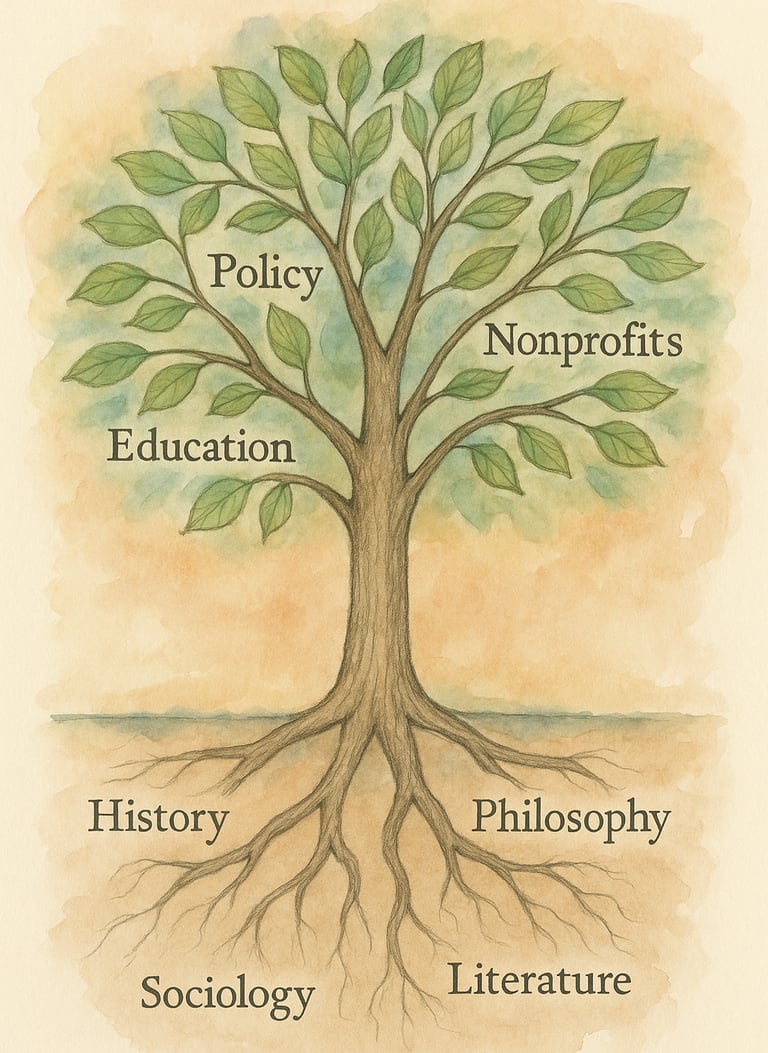
That said, I give special attention to social science and humanities PhDs. Why? Because their pathways outside academia are less visible than those of their STEM counterparts.
PhDs in fields like engineering, mathematics, and the life and physical sciences often see clear examples of alumni moving into industry, nonprofit, or government roles. Employers also tend to immediately recognize the skills of these STEM-trained scholars, making their transitions smoother.
By contrast, those in fields like history, philosophy, anthropology—or even sociology and psychology (though both fields are technically STEM)—don’t always see models of success beyond academia. Their skills may not translate as obviously into job postings, which can make the process feel isolating and uncertain.
The Misconception: “My Training Only Belongs in Academia”
One of the most common challenges I see among social science and humanities PhDs is the belief that their training is only relevant to academic work. Because they don’t see many peers pursuing other paths, it’s easy to assume their expertise has no place outside the university. Non-academic employers sometimes also have the same misconceptions for the same reasons.
But this assumption is both widespread and false.
The Hidden Value of Social Science and Humanities Training
Social science and humanities PhDs bring powerful strengths to the table:
The ability to analyze complexity and nuance
Strong communication and storytelling skills
Deep cultural and ethical awareness
Advanced problem-solving and contextual thinking
These are exactly the skills organizations need to navigate today’s challenges. Too few PhDs realize how valuable it is outside academia. Additionally, because non-academic employers may also have the same misconceptions, it is crucial that you are able to communicate and demonstrate how your skills are applicable outside of academia.
Why This Is My Focus
This is why I dedicate extra time and care to supporting social science and humanities PhDs. While the advice I share can help anyone, I have a special place in my heart for scholars who struggle to see their own value beyond the university.
If you’re a social science or humanities PhD worried about your career prospects, know this: you are not behind, and you are not without options. Your training equips you for more than academia -- it equips you for the world.
© 2025 Marya T. Mtshali. All rights reserved. No part of this publication may be reproduced, distributed, or transmitted in any form or by any means without prior written permission from the author.
Scholarly Transitions
Career Coaching for PhDs—Informed by Experience Across Industry, Nonprofit, and Higher Education
Stay in touch
scholarlytransitions@gmail.com
© 2026. All rights reserved.


Member of Career Counselors' Consortium Northeast