
From Academic Grants to Business Development: Translating Your Funding Success
PhD considering grant manager or development roles? Learn how to assess your eligibility and translate your academic experience into nonprofit skills.
CAREER EXPLORATIONHIDDEN CIRRICULUMNON-ACADEMIC JOB MARKET
Marya T. Mtshali, Ph.D.
5/25/20263 min read
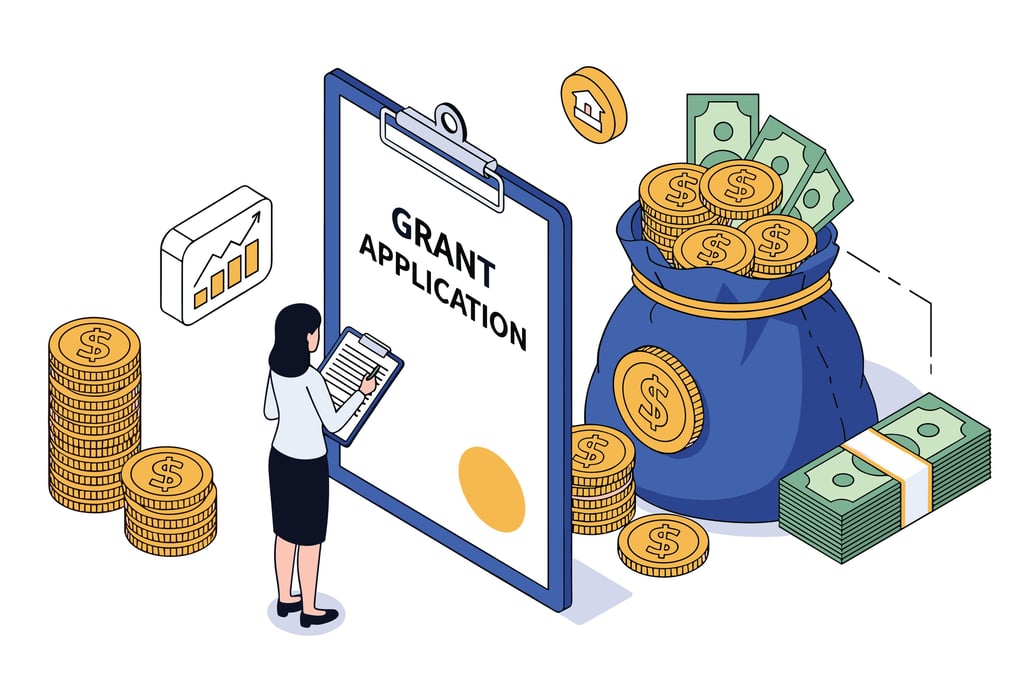
When I work with PhDs who are exploring roles in nonprofits, startups, or the corporate sector, they often freeze when they see job titles involving "Business Development," "Strategic Partnerships," or "B2B Sales."
Their immediate reaction is almost always: "I'm an academic. I've written grants, but I definitely don't have business development experience. So, I probably can't apply for this job, right?"
My answer to them is: It depends entirely on the specific role.
Securing funding is a massive asset, but 'business development' is a broad umbrella that covers two very different operational tracks: Grants Management and Development. In the nonprofit and corporate worlds, these are two entirely different career tracks. Depending on your specific academic background, one of these paths is a highly relevant, natural fit for your PhD skills. The other is a much trickier leap that requires specific, non-academic evidence to prove you can do the job.
Let's break down the difference so you can determine if you are actually eligible for a role, stop applying for the wrong jobs, and start targeting the positions where your academic experience shines.
Path 1: Grants Management (The Natural Fit)
If the job you are looking at is heavily focused on grant writing, grant management, or proposal development, your academic experience is highly relevant.
You had to identify prospective funding sources, analyze their strategic priorities, and synthesize complex qualitative or quantitative data into a highly persuasive, 20-page proposal. You likely had to manage strict budgets and ensure compliance with complex institutional guidelines.
This is exactly what an industry Grants Manager does. Furthermore, if you have ever served on a university committee or an organizational board where you actually had to vet and review grant applications, your experience is even more valuable to hiring managers. You know how funders think because you have been one.
Translating Your Grants Experience: To land these roles, you cannot just list the name of a fellowship or grant on your resume. You have to translate the process to make your operational impact visible:
What You Usually Write (The "Before"): Recipient, National Science Foundation Doctoral Dissertation Grant ($50,000). Served on University Graduate Funding Committee.
The Non-Academic Translation (The "After"):
Directed end-to-end proposal development, synthesizing complex data into a persuasive pitch that successfully secured $50,000 in competitive funding.
Evaluated and vetted 50+ grant applications as a board committee member, applying rigorous evaluation criteria to allocate funding and ensure alignment with institutional priorities.
Path 2: Development & Donor Relations (The "It Depends" Fit)
Development-focused roles extend beyond the solitary work of writing grants. These positions typically involve donor cultivation, fundraising strategy, and revenue generation.
Because these roles are highly relational, many PhDs assume they aren't qualified. But you might be overlooking massive portions of your academic labor. Employers in this space are looking for evidence that you can coordinate people, logistics, and resources for major initiatives and manage donor pipelines.
How do you know if you are eligible for a Development role? Ask yourself if your academic career has involved extensive stakeholder engagement. Have you organized massive departmental conferences or symposiums? Have you personally solicited donations or built strategic partnerships for a local community group? Have you advocated for inclusion initiatives across diverse institutional audiences?
Crucially, employers want to see that you can use digital tools, specifically Client Relationship Management (CRM) systems like Salesforce, to run fundraising campaigns and manage stakeholder relationships. If you have experience managing alumni databases, maintaining project trackers, or using digital platforms to coordinate large groups of people, you already possess the operational foundation for Development.
Translating Your Development Experience: If you have this background, here is how you translate it for a hiring manager:
The Non-Academic Translation for Development (The "After"):
Cultivated and managed strategic relationships with a diverse network of 100+ community leaders, alumni, and stakeholders to drive long-term program support.
Coordinated event logistics and utilized CRM databases to track stakeholder engagement, manage pipelines, and ensure the successful execution of a 300-person symposium.
Choosing Your Path
Your PhD has given you incredible, highly monetizable skills. To transition successfully, you just need to align your resume with the specific flavor of your academic experience.
If you love the rigorous, analytical work of writing persuasive proposals and managing compliance, lean into Grants Management. If you genuinely thrive on relationship-building, running events, and managing complex stakeholder pipelines through CRMs, highlight your operational history and target Development.
Once you recognize where your specific experience fits, you can step into the job market with the confidence that you are exactly what they are looking for.
© 2026 Marya T. Mtshali. All rights reserved. No part of this publication may be reproduced, distributed, or transmitted in any form or by any means without prior written permission from the author.
What is your post-PhD career persona?
Are you a Strategist, Communicator, Analyst, or Builder? Take my free, quick quiz to uncover your unique strengths and get the Post-PhD Starting Point workbook — featuring 30 transferable skills employers want right now.
Bonus: When you get the workbook, you’ll also get early access to the Scholarly Transitions newsletter, which includes:
• Practical job search and career transition tips for PhDs
• Academic and professional development insights
• Highlighted job postings ideal for PhDs exploring non-academic paths
Scholarly Transitions
Career Coaching for PhDs—Informed by Experience Across Industry, Nonprofit, and Higher Education
Stay in touch
scholarlytransitions@gmail.com
© 2026. All rights reserved.
Member of Career Counselors' Consortium Northeast